ICUMSA 45 is the most requested sugar grade in international trade — and the one most targeted by fraud. If you are sourcing from Brazil, the difference between a good deal and a total loss usually comes down to diligence you do before any money moves. This guide covers what the grade actually means, how to verify a supplier is real, and the specific patterns that should end a conversation.
What ICUMSA 45 is and why it matters
ICUMSA stands for the International Commission for Uniform Methods of Sugar Analysis. The number is a measure of colour: the lower the figure, the more refined and whiter the sugar. ICUMSA 45 sits at the refined end of the scale and is the standard specification for white refined sugar intended for direct human consumption.
Higher numbers describe less refined product. ICUMSA 150 and 600–1200 correspond to progressively rawer sugars used in industrial processing and further refining. Buyers should be precise here, because “white sugar” without a stated ICUMSA figure is not a specification — it’s a description.
A genuine ICUMSA 45 offer should be accompanied by a full specification sheet covering colour, polarisation (typically 99.8% minimum), moisture, ash content, and granulation, plus the sulphur dioxide level. Treat a quote that omits these as incomplete rather than merely informal.
Why Brazil leads production
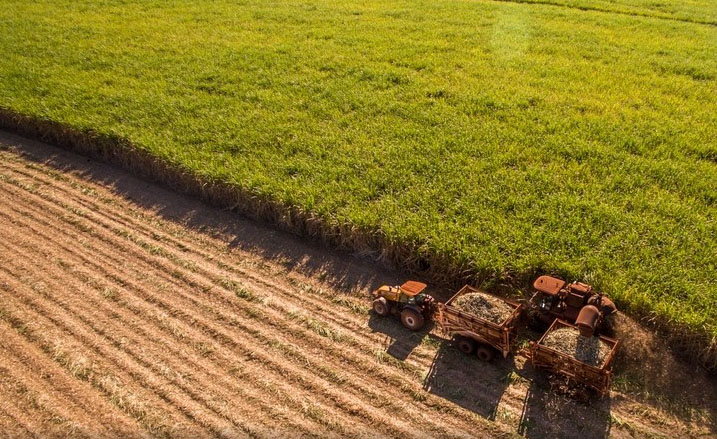
Brazil is the world’s largest sugar producer and exporter, with an industry built on favourable growing conditions in the centre-south, large-scale mills, and established export infrastructure — Santos being the principal sugar port.
One structural feature worth understanding: Brazilian mills can shift output between sugar and ethanol depending on relative prices. That flexibility means Brazilian export availability and pricing respond not only to sugar demand but to the ethanol and fuel market, which is a genuine factor in supply planning.
How to identify a legitimate manufacturer
The single most useful distinction is between a mill (the actual producer), an authorised trader with a real relationship to one, and an intermediary with neither. Most fraud happens in the third category, presenting as the first.
Practical verification steps:
- Check the corporate registration. Every legitimate Brazilian company has a CNPJ number. It can be verified against the Receita Federal register — confirm the company exists, is active, and that its registered activity is consistent with sugar production or trading.
- Confirm export history. Real exporters have a documented track record and can reference it. A producer that cannot evidence prior shipments is a significant risk.
- Verify the address and facility. Mills are large, fixed industrial sites. A “producer” operating from a residential address or a virtual office is not a producer.
- Insist on direct contact. Speak to the company on verifiable channels — a corporate domain, a listed landline. Deals conducted entirely through free email accounts and messaging apps warrant particular scepticism.
- Use your bank. Your bank can perform counterparty checks and confirm the receiving institution. This is a service worth using before you commit funds, not after.
Documents to request
Before contracting, expect to see: the CNPJ registration and company incorporation documents; an export licence and evidence of export capability; a full product specification sheet; a certificate of analysis from a recognised laboratory (SGS and similar are common in this trade); phytosanitary and health certificates; certificate of origin; and, for food-grade product, the applicable food safety documentation.
At shipment stage the document set includes the bill of lading, commercial invoice, packing list, insurance certificate, and the inspection certificate. A crucial point: verify certificates directly with the issuing body. Forged inspection certificates are common, and a PDF proves nothing on its own — the issuing laboratory will confirm authenticity on request.
Common scams and how to avoid them
The fraud patterns in this market are consistent and recognisable:
- Advance fee. Requests for upfront payment for “allocation”, “documentation”, or “port fees” before any verified product exists. Legitimate transactions are structured through a letter of credit or documentary collection, not advance wires.
- Fake proof of product. Documents, tank receipts, or SGS certificates that appear genuine but are fabricated. Always verify with the issuer directly.
- Below-market pricing. Offers materially under prevailing market price are the most reliable fraud indicator in this trade. There is no legitimate reason for a producer to sell well below market.
- Impersonation. Fraudsters use the names, logos, and sometimes staff identities of real mills, often with a lookalike domain. Confirm contact details independently through the company’s known corporate site, never through details supplied in the offer.
- Manufactured urgency. Pressure to sign or pay immediately because “another buyer is waiting” exists to prevent diligence. Real suppliers accept that verification takes time.
- Unusual payment routing. Payment requested to a personal account, a third-country account, or an entity whose name differs from the contracting company.
The underlying principle is simple: no verification step should be skipped because of time pressure, and no funds should move before the product and counterparty are confirmed.
FOB vs CIF pricing
FOB (Free On Board) means the seller delivers the goods loaded onto the vessel at the named port of shipment. From that point, freight, insurance, and risk are the buyer’s. FOB Santos is a common Brazilian sugar term.
CIF (Cost, Insurance and Freight) means the seller arranges and pays for carriage and insurance to the named destination port. The headline price is higher because it includes those costs.
Neither is inherently better. FOB gives you control over freight and can be cheaper if you have shipping relationships; CIF is simpler if you do not. What matters is comparing offers on the same basis — a FOB price and a CIF price are not comparable numbers, and confusion between them is sometimes used to make an offer look more attractive than it is. Always confirm which Incoterms version applies and exactly which port is named.
Requesting a quote
To get a serious quote, provide: the exact grade (ICUMSA 45), quantity and whether shipment is single or on a schedule, packaging requirements (50kg bags, jumbo bags, or bulk), destination port, preferred Incoterms, and your intended payment instrument. Vague enquiries attract vague responses — and disproportionately attract fraudulent ones.
Expect in return a formal offer with full specification, validity period, delivery timeline, payment terms, and inspection arrangements. Then verify the counterparty before proceeding, using the steps above.
Sourcing with Sugar Made in Brazil
We connect international buyers with Brazilian sugar supply and handle the documentation and logistics side of the transaction. If you are evaluating an offer from another source and want a second opinion on the paperwork, we are happy to look at it — a short conversation before signing is considerably cheaper than a recovery process afterwards.
Contact us with your grade, quantity, destination, and preferred terms, and we’ll respond with a formal offer.
This guide is general trade information, not legal or financial advice. Conduct your own due diligence and take professional advice appropriate to your jurisdiction before entering any contract.